

Korean barbecue is only as good as the cuts on the table. A well-marbled ribeye and a poorly sourced one may look similar on the menu, but they behave very differently over heat and taste even more different on the plate. Understanding what distinguishes a quality cut from a mediocre one gives you a sharper eye when ordering and a better sense of what you are eating vs what you are paying for. This is what to look for across the key beef and pork cuts served at KBBQ.
Beef Cuts
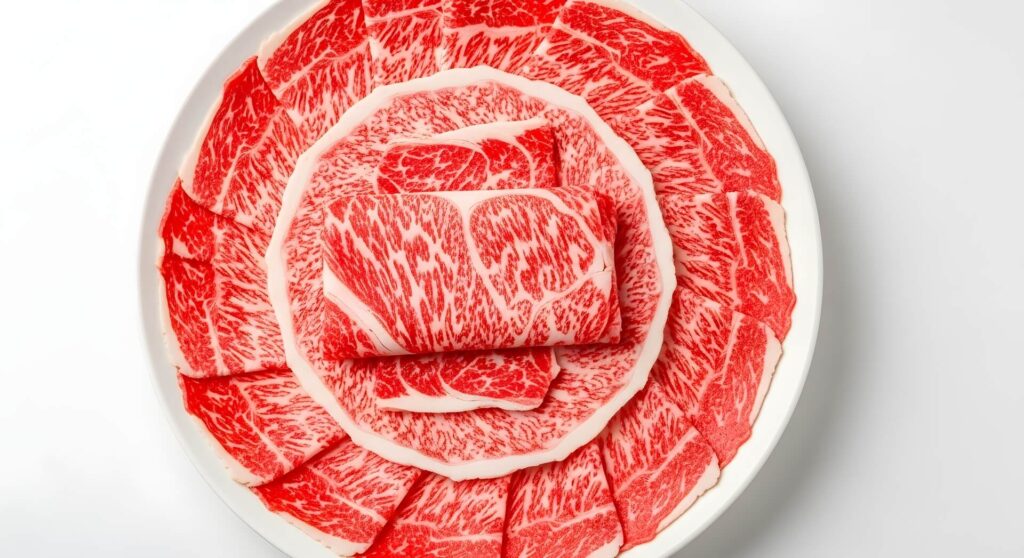
Ribeye (Kkotdeungsim)
Ribeye is one of the most prized cuts in KBBQ, and for good reason. It has a high fat content with marbling distributed throughout the muscle, which keeps the meat moist and flavourful under high heat. When assessing quality, look for fine, evenly distributed marbling rather than large pockets of fat concentrated at the edges. The meat itself should be a deep, cherry red, and the fat should be creamy white rather than yellow, which can indicate older or lower-grade beef.
Kkotdeungsim is the Korean BBQ cut most equivalent to ribeye. Thinly sliced versions of kkotdeungsim should be cut consistently thin so they cook quickly without drying out.
Brisket (Chadolbaegi)
Chadolbaegi is a Korean BBQ cut made from the fatty brisket, typically the brisket plate. It is known for being extremely thinly sliced so it cooks almost instantly on a hot grill. Because brisket is a working muscle, texture depends heavily on slicing—when cut properly, chadolbaegi is tender with a rich, beefy flavour and a pronounced fatty finish. Look for slices with fine marbling and thin ribbons of fat running through the meat, which melt quickly during grilling and add depth without heaviness.
Short Rib (Galbi)
The quality gap between good and mediocre galbi is wider than most people expect. Well-sourced galbi shows clean butchery, with evenly trimmed cuts and natural fat distribution between the muscle layers. Fresh meat should be a consistent bright red with no grey or brown discoloration, which can indicate oxidation or age. Flanken-style galbi (LA galbi), cut across the bone into thin strips, should have consistent thickness so it grills evenly without overcooking in thinner sections. While marinade style varies widely in Korean BBQ, overly heavy or cloyingly sweet seasoning can sometimes be used to compensate for lower-quality meat, whereas high-quality galbi can still taste balanced and beef-forward even when marinated.
Tenderloin (Ansim)
Tenderloin is the leanest of the primary KBBQ beef cuts and comes from a muscle that does very little physical work, which is why the texture is exceptionally soft and the fibres are fine and delicate. It is typically a bright cherry red with a clean, uniform grain and minimal visible connective tissue when properly trimmed. Because it contains very little fat, it offers less protection on the grill and can dry out quickly if overcooked. Ansim is best cooked briefly over high heat, often in thin slices for Korean BBQ, where just a few seconds per side are enough to preserve its tenderness and mild, clean beef flavour.
Pork Cuts
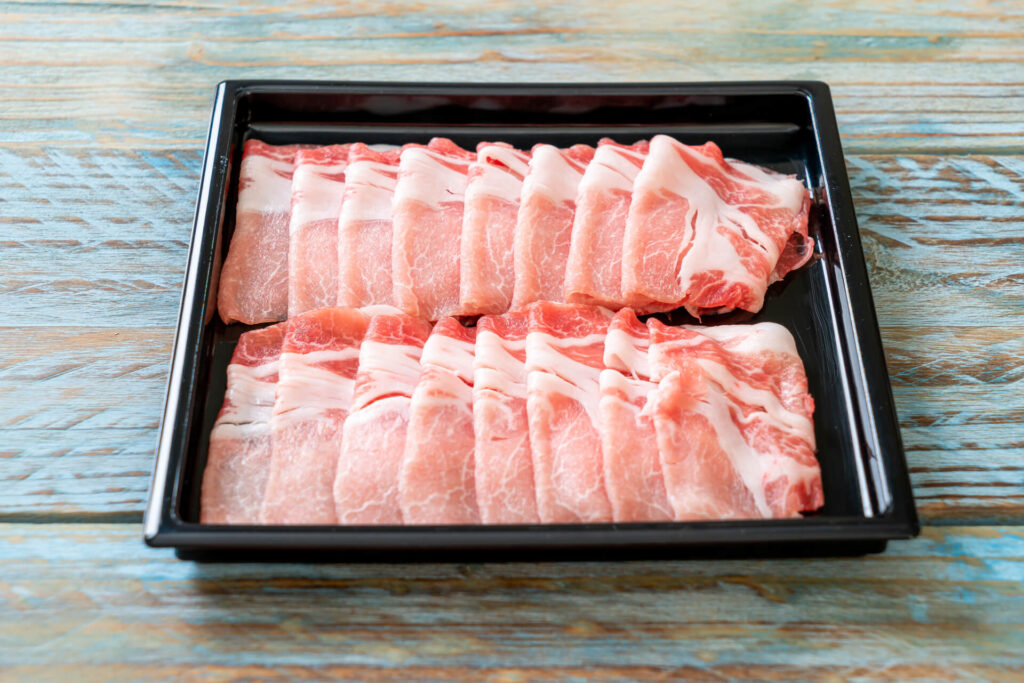
Pork Belly (Samgyeopsal)
It is the most ordered cut in Korean barbecue, and the one with the most room for variation in quality. Good samgyeopsal has distinct, clearly defined alternating layers of fat and meat—the name references this directly, with sam meaning three and gyeop meaning layers. The fat should be firm and white, not soft or translucent, and the meat layers should be an even pink throughout. A wet, slick surface is a sign the pork has been frozen and thawed repeatedly, and worth avoiding. Slice thickness also matters more than most people realise: too thin and the fat renders out completely before any colour develops, leaving the pieces flat and dry before they even reach the wrap.
Pork Neck (Moksal)
Moksal really does not get the attention it deserves. The neck is a well-exercised muscle with good intramuscular fat that runs through the meat in thin veins rather than in large, uneven deposits—the kind of fat distribution that keeps each bite moist without making it heavy. The texture is slightly coarser than belly, and it holds up well to higher heat without tightening as quickly. It is also one of the better cuts for pairing with ssamjang, since the richness of the meat can hold its own against the bold, fermented flavour of the paste rather than being overtaken by it.
Pork Shoulder (Hangjeongsal)
Cut from the jowl or upper shoulder near the neck, hangjeongsal is prized for its fine texture and well-distributed fat. It is a smaller, more specific cut than moksal, and a good one should feel firm before cooking, with clean pink meat and white fat that has not begun to separate from the muscle. It grills quickly, cools and firms faster than belly or neck, and is best eaten within seconds of coming off the grate. The eating window on hangjeongsal is short, but when you catch it at the right moment, it is one of the more texturally satisfying cuts on the table.
Pork Belly with Skin (Ogyeopsal)
Ogyeopsal is pork belly with the skin intact, adding an additional layer to the standard cut and a noticeably different textural experience. The skin requires more heat and more time to blister and crisp, and it will not cooperate on a dirty or uneven grate. Quality starts with the skin itself: it should be clean, pale and free of any bristle, with a firm fat layer directly beneath it. When cooked properly, the edges blister and the fat underneath renders down into the meat below. It is a more demanding cook than standard samgyeopsal and slightly less forgiving of impatience. However, the textural contrast between the crisped skin and the soft fat layers beneath it makes a convincing case for the extra effort.
Visible Details You Can Find at Hanjip Korean Grill House
Knowing what to look for in a KBBQ cut does not require professional butchery knowledge, but paying attention to a handful of reliable visual cues. Colour, marbling, fat distribution and slice consistency are all things you can assess at a glance, and they tell you most of what you need to know about what is on the grill in front of you.
At Hanjip Korean Grill House, cut quality is something we take seriously at the sourcing stage, long before it reaches your table. Every cut on our menu is selected with grilling performance and flavour in mind. Book your table at Hanjip Korean Grill House and taste the difference that considered sourcing makes.
